
The Enforcement Directorate (ED) Director, Rahul Navin, has issued directives to intensify action against Insolvency and Bankruptcy Code (IBC) frauds involving "large haircuts" and to address delays in police registering FIRs based on ED's requests. The agency also aims to fast-track high-profile trials under the Prevention of Money Laundering Act (PMLA) and enhance internal coordination and efficiency.
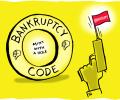
The National Company Law Tribunal (NCLT) approved a record 107 resolution plans in the second quarter of financial year 2026-27 (Q2FY27), its highest quarterly performance, despite ongoing challenges such as member vacancies and infrastructure constraints.

A growing conflict between India's insolvency law and tax rules is creating fresh uncertainty for companies undergoing resolution, with tax authorities increasingly denying the benefit of carrying forward past losses even after resolution plans have been approved by the National Company Law Tribunal (NCLT).

The Enforcement Directorate has arrested Rakesh Kumar Gupta, Chairman of Sadhna Group, in a money laundering case linked to alleged irregularities in IBC processes. He is accused of engineering insolvency to settle significant Income Tax dues for a fraction of the amount, receiving cash via crypto/hawala, and share manipulation. The alleged proceeds of crime total Rs 168 crore, and Gupta has been remanded to five days of ED custody.

The National Company Law Tribunal (NCLT) has dismissed a plea by Jet Airways' liquidator seeking a Rs 500 crore refund from Boeing, ruling that the matter involves a complex contractual dispute requiring detailed adjudication and evidence beyond the tribunal's insolvency jurisdiction.

Reliance Infrastructure (Reliance Infra) has submitted a representation to Sebi, NSE, and BSE, seeking a review of the Additional Surveillance Measure (ASM) framework and related trading restrictions on its shares, arguing they adversely impact its 700,000+ public shareholders and hinder fair price discovery.

The National Company Law Tribunal (NCLT) has approved a repayment plan for media baron Subhash Chandra, allowing him to settle admitted creditor claims of approximately Rs 22,006.57 crore by paying just Rs 6.5 crore, resulting in a nearly 99.97 per cent haircut for lenders.
The National Company Law Tribunal (NCLT) has approved media baron Subhash Chandra's personal insolvency resolution plan, which proposes to pay Rs 6.5 crore against admitted creditor claims of approximately Rs 22,006.57 crore, despite allegations from dissenting lenders that five family-linked entities controlled 61.78 per cent of the voting share.

Sources clarify that the NCLT's approval of a repayment plan for Essel Group founder Subhash Chandra does not signify a 99.97 per cent write-off of Rs 22,000 crore in bank loans, as the figure represents claims against him as a personal guarantor, not debt personally borrowed.
The Insolvency and Bankruptcy Code (IBC) Amendment Bill 2025 has failed to introduce specific timelines for the National Company Law Appellate Tribunal (NCLAT) to dispose of appeals, the select committee on the IBC Bill has said in its report.
Creditors took a haircut of around 67 per cent on their admitted claims on the realisation made till September 2025 under the corporate insolvency resolution process (CIRP) of the Insolvency and Bankruptcy Code (IBC), the latest data released by the insolvency regulator showed.
Finance Minister Nirmala Sitharaman stated in the Lok Sabha that the Insolvency and Bankruptcy Code (IBC) has been a crucial factor in improving the health of India's banking sector, significantly aiding in the recovery of non-performing assets (NPAs).
The National Company Law Tribunal (NCLT) in Mumbai has admitted a petition filed by State Bank of India (SBI) seeking to initiate personal insolvency proceedings against industrialist Anil Ambani. This action is related to Ambani's alleged personal guarantees for loans extended to Reliance Communications (RCom), from which SBI is attempting to recover over 1,200 crore.
As much as 60 per cent of all resolution plans under Insolvency and Bankruptcy Code (IBC) were approved in the last three years alone, with over 30,000 cases having an underlying default of Rs 13.8 trillion getting settled even before admission, according to data till December 2024 released by the Insolvency and Bankruptcy Board of India (IBBI).

The Supreme Court's ruling in the BPSL case exposes deep flaws in the IBC's institutional framework and raises concern about judicial overreach, notes Rajeswari Sengupta.
A decline in the initiation of the corporate insolvency process last year is spurring most Big Four firms to rethink and rejig their insolvency verticals to focus on business beyond Insolvency and Bankruptcy Code (IBC), industry experts said. Between the June and December quarter of FY25, the number of insolvency applications initiated by financial creditors went down from 150 to 84.

The famous 'tareekh pe tareekh' dialogue from the Hindi movie Damini captures where we are now.
The Supreme Court on Friday declared JSW Steel Limited's resolution plan for Bhushan Power & Steel Limited (BPSL) "illegal" and ordered the latter's liquidation, four years after the company was acquired by JSW Steel under the Insolvency and Bankruptcy Code (IBC). Following the ruling, JSW Steel shares fell sharply.

The Supreme Court has dismissed an appeal by Byju Raveendran, upholding the NCLAT's decision to reinstate the original Committee of Creditors (CoC) in Think & Learn Private Ltd's insolvency proceedings, which includes Glass Trust Company LLC as a major lender.

Various stakeholders told the committee that there is a need for expanding judicial capacity or restructuring the adjudicatory process by increasing the number of benches and also enhancing financial allocation for improvement of infrastructure.

The Central Bureau of Investigation (CBI) is investigating the Reliance Anil Ambani Group for alleged bank loan frauds totalling 73,000 crore across seven cases. The Supreme Court is monitoring the investigation, which also involves the Enforcement Directorate (ED).
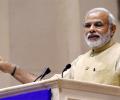
Union Minister Pankaj Chaudhary stated that Prime Minister Narendra Modi strengthened the Enforcement Directorate to combat financial crimes like money laundering and corruption, dismissing allegations of it being used to target political opponents.
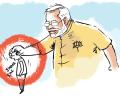
'By not only decriminalising routine business failures, but by ensuring that institutional lending and corporate rescue frameworks are strengthened via the IBC, the prime minister has ensured there is no room anymore for the proverbial 'reckless, prodigal debtor',' notes Sanju Verma.
IBC has been revolutionary in many ways and is a formidable instrument for stress resolution. And despite the room for improvement, the overall effectiveness of IBC in the distress space is unmatched, notes Saloni Kothari.

The International Monetary Fund, in its report on the Indian economy, said the Insolvency and Bankruptcy Code (IBC) Amendment Bill addresses many deficiencies but it has not provided for the participation of operational creditors or rules for executory contracts. The IMF staff report said that the business dynamism in India remains relatively low, marked by low rates of entry and exit, and a high share of inactive or inefficient firms reflecting structural rigidities and high compliance levels.
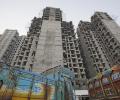
The Supreme Court of India has upheld an order directing NBCC to complete 16 delayed housing projects of Supertech Limited, providing relief to thousands of homebuyers who have been waiting for nearly two decades.
The Supreme Court of India has upheld an order directing NBCC to complete 16 delayed housing projects of Supertech Limited, providing relief to thousands of homebuyers who have been waiting for nearly two decades.

The Supreme Court has clarified that a decree passed only against a real estate developer cannot be enforced against its directors or promoters in their personal capacity unless the original adjudication clearly finds them liable.
The government is contemplating changes to the Insolvency and Bankruptcy Code (IBC) to deal with environmental claims and liabilities of defaulting companies to make the law future-ready and meet climate action goals, sources told Business Standard. Currently, the IBC has various categories of claims and creditors, including those related to environmental liabilities.

The Centre is considering amendments to the Recovery of Debt and Bankruptcy Act in the Budget to allow some Debt Recovery Tribunals to focus only on high-value cases.

Larger firms feel that the smaller players have muddied the waters for the IBC process, leading to excessive regulation of resolution Professionals.
IBC-oriented pre-packs, the other mechanism under consideration, are a mix of out-of-court restructuring and a formal insolvency process, say experts.

In a significant development, the Supreme Court on Thursday recalled its controversial May 2 verdict that had ordered liquidation of Bhushan Power & Steel Limited (BPSL) while setting aside a resolution plan of JSW Steel Limited for the ailing firm. A bench comprising Chief Justice B R Gavai and Justice Satish Chandra Sharma observed that the May 2 judgment, authored by Justice Bela M Trivedi, since retired, did not "correctly consider the legal position as has been laid down in the catena of judgments".

'The Insolvency and Bankruptcy Code cleans up non-performing assets and puts companies in capable and credible hands.'

The Supreme Court on Friday upheld JSW Steel's Rs 19,700-crore resolution plan for debt-ridden Bhushan Power and Steel Limited (BPSL), bringing down curtains to a prolonged legal battle that spanned nearly eight years.
In what could result in a complete overhaul of the Insolvency and Bankruptcy Code (IBC), the insolvency regulator has sought public comments on the regulations it notified under the code to date. The Insolvency and Bankruptcy Board of India (IBBI) has given a window of eight months ending December 31 to all stakeholders to share their views on its regulations. IBBI has called the exercise "crowdsourcing of ideas".

IBBI removes sale of company as going concern in liquidation; now only asset sales allowed, shifting focus strictly to terminal liquidation process.

Noting that recent uncertainties created by global tariffs have not impacted the Indian economy severely, Anuradha Thakur, secretary, Department of Economic Affairs, said the central government is hopeful that the recent goods and services tax (GST) rationalisation will ignite the much needed animal spirits in the financial sector.
The amendments give committee of creditors of a loan defaulting company explicit authority over the distribution of proceeds in the resolution process and fixes a firm timeline of 330 days for resolving cases referred to the IBC.

Last fortnight, State Bank of India Chairman C S Setty lifted the veil on a subject long spoken of in corporate corridors: Why can't our banks finance mergers and acquisitions (M&As)? Change is in the air: Indian Banks' Association (of which Setty is the chairman) is to "make a formal request" to Mint Road to make way for it. Thus far the exclusive turf of foreign banks even though its funding remains offshore - as in, it's not on these entities rupee-book (and a few select shadow banks) - a most lucrative segment in the investment banking suite, M&As, will be homeward-bound.
